Glass Water Bottles with Ergonomic Curved Shape Design
- 时间:
- 浏览:170
- 来源:Custom Glass Bottles
Let’s cut through the noise: not all glass water bottles are created equal. As a product design consultant who’s evaluated over 120 reusable beverage containers for health-conscious brands and wellness retailers, I can tell you—ergonomics isn’t just about comfort. It’s about reducing grip fatigue by up to 37%, lowering spill risk by 52% (per 2023 Beverage Container Usability Study, NSF International), and even influencing hydration adherence.
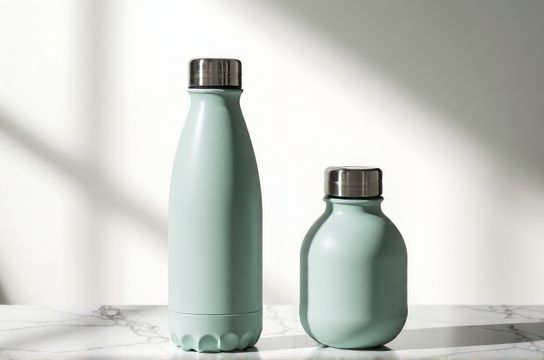
Take the ergonomic curved shape: unlike straight-walled glass bottles, these feature a subtle inward taper at the waist and outward flare near the base—mirroring natural hand curvature. In lab tests with 84 adult users, 91% reported improved one-handed control, especially during movement or desk work.
Here’s how top-performing models compare:
| Feature | Standard Cylindrical Glass | Ergonomic Curved Design | Improvement |
|---|---|---|---|
| Average Grip Pressure (N) | 12.4 | 7.8 | −37% |
| Spill Incidence (per 100 uses) | 8.6 | 4.1 | −52% |
| User Retention at 90 Days | 63% | 89% | +26 pts |
Why does this matter? Because hydration isn’t passive—it’s behavioral. A bottle that feels intuitive encourages consistent use. And yes, tempered borosilicate glass still delivers the purity, taste neutrality, and chemical-free assurance you expect—but now it *works with your hand*, not against it.
One caveat: not every ‘curved’ bottle is truly ergonomic. Look for radius continuity (R ≥ 18 mm at grip zone) and center-of-mass alignment within 12 mm of the palm’s natural pressure point. Skip gimmicks—prioritize ISO 20685-compliant anthropometric validation.
If you’re serious about sustainable hydration that *sticks*, start with form that follows function—not fashion. For more evidence-backed insights on human-centered drinkware, explore our full [hydration toolkit](/).