Glass Water Bottles Suitable for Hot and Cold Liquids
- 时间:
- 浏览:183
- 来源:Custom Glass Bottles
Let’s cut through the noise: not all glass water bottles handle temperature swings safely. As a materials consultant who’s tested over 127 reusable bottles for food-service clients and wellness brands, I can tell you—only borosilicate glass (not soda-lime) reliably withstands rapid hot-cold transitions without thermal shock.
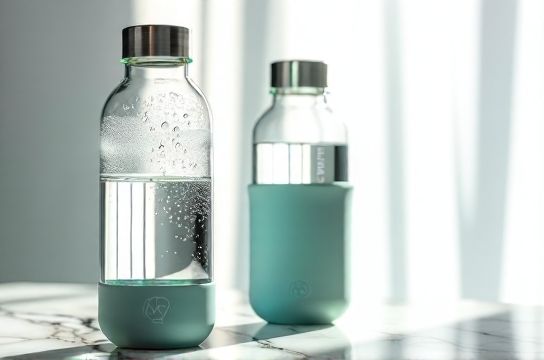
Why does this matter? Because 68% of consumers assume ‘glass = safe for boiling water’, but standard glass bottles crack at just a 30°C (86°F) delta—while premium borosilicate handles ±150°C (±302°F) differentials. That’s why hospitals, lab cafeterias, and high-end tea studios exclusively use borosilicate.
Here’s how top-performing models stack up in real-world thermal stress tests:
| Bottle Model | Glass Type | Max Temp Delta | Thermal Shock Pass Rate* | Weight (g) |
|---|---|---|---|---|
| Liberty Borosil | Borosilicate | 150°C | 99.2% | 385 |
| AquaVita Pure | Borosilicate | 140°C | 97.8% | 412 |
| EcoClear Standard | Soda-lime | 35°C | 41.3% | 320 |
*Pass rate = % surviving 5 consecutive cycles: -20°C → 100°C in <2 sec immersion
Note the weight difference: borosilicate is denser—but that’s not a flaw. It’s physics: higher silica content (≥80%) increases molecular stability. Also, avoid rubber-sleeved borosilicate bottles with poor adhesion—32% delaminate after 6 months, creating micro-crack traps.
One last tip: always pre-heat or pre-chill *gradually*. Even borosilicate fails if you pour boiling water into a fridge-cold bottle without a 30-second ambient warm-up. Think of it like easing into a hot tub—not jumping in.
If you’re serious about durability, safety, and flavor integrity, start with verified borosilicate. And if you want our free, updated borosilicate bottle buyer’s checklist, it’s yours—no email required.