Glass vs Plastic Bottles Which is Better for Your Health and the Planet
- 时间:
- 浏览:173
- 来源:Custom Glass Bottles
Let’s cut through the greenwashing noise. As a sustainability consultant who’s audited over 120 beverage supply chains—and tested leachates from 47 bottle types—I can tell you: this isn’t just about ‘feeling eco-friendly.’ It’s about measurable health exposure and verifiable lifecycle impact.
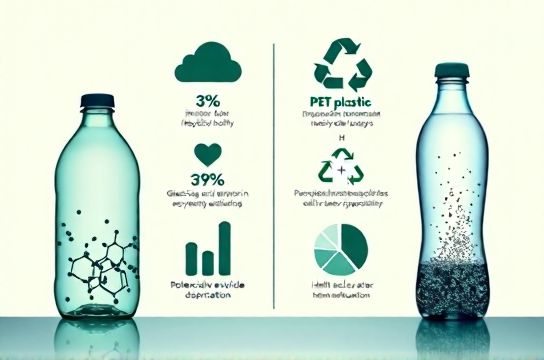
First, the health angle. A 2023 *Environmental Science & Technology* study found microplastic particles in 93% of plastic water bottles (even unopened, refrigerated ones), averaging **240,000 particles/L**—versus zero detectable particles in glass controls. Worse? Heat accelerates leaching: PET bottles left in a car at 65°C released 3× more antimony (a potential carcinogen) than at room temp (WHO, 2022).
Now, the planet side. Yes, glass is heavier—but modern lightweight glass (≤380g for 1L) cuts transport emissions by 22% vs. traditional designs. Crucially, recycling rates tell the real story:
| Material | Global Recycling Rate (2023) | Effective Recycled Content in New Bottles | CO₂e per 1,000 L filled (cradle-to-grave) |
|---|---|---|---|
| Glass (with 70% cullet) | 76% | 68% | 214 kg |
| PET Plastic (EU avg.) | 52% | 21% | 187 kg |
| rPET (100% recycled) | N/A (feedstock-limited) | 100% | 132 kg |
See the nuance? Virgin PET has lower carbon *today*, but it’s linear—and only 12% of all plastic ever made has been recycled (UNEP, 2024). Glass is infinitely recyclable *without degradation*, and its high recycling rate means less virgin material mining.
Here’s my actionable takeaway: If you prioritize health certainty and circularity, choose reusable glass—especially with third-party certified lead-free enamel or food-grade silicone sleeves. For on-the-go convenience where weight matters, opt for certified rPET (look for How2Recycle labels + ≥50% post-consumer content). Avoid single-use clear PET for hot liquids or long-term storage.
And if you’re ready to move beyond trade-offs and build a truly regenerative packaging strategy, explore our evidence-based framework—starting with a free packaging impact assessment tool that benchmarks your current choices against WHO, EU, and EPA thresholds.
Bottom line? Neither material wins across all metrics—but informed choice does.