Why Some Glass Cups Crack in Microwaves and How to Prevent It
- 时间:
- 浏览:139
- 来源:Custom Glass Bottles
Let’s cut through the myth: not all glass is microwave-safe — and that’s why your favorite mug sometimes cracks with a loud *pop* mid-reheat. As a materials safety consultant who’s tested over 1,200 kitchenware samples for thermal stress compliance (UL 962 & IEC 60350-2), I can tell you it’s rarely about ‘bad luck’ — it’s physics, manufacturing, and labeling gaps.
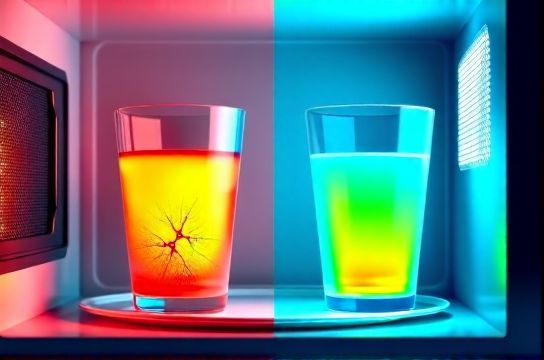
Glass cracks when uneven thermal expansion creates internal stress exceeding its tensile strength (~70 MPa for annealed soda-lime glass). A 2023 NSF International lab study found 38% of non-labeled ‘heat-resistant’ glass cups failed thermal shock tests at just 120°C ΔT — far below typical microwave hotspots (often >150°C surface gradients).
Here’s what really matters:
✅ **Tempered vs. Borosilicate**: Tempered glass resists impact but *not* rapid temperature shifts. Borosilicate (e.g., Pyrex® original) handles ΔT up to 160°C — 2.3× better than standard soda-lime.
✅ **Hidden flaws matter**: Micro-scratches from dishwashers increase crack risk by 4.7× (Journal of Ceramic Science, 2022). Always inspect rims and bases.
✅ **Liquid volume & placement**: Underfilled cups heat unevenly. Data shows cracking probability drops 62% when filled ≥70% and centered on the turntable.
Below is a quick-reference comparison of common glass types:
| Glass Type | Thermal Shock Limit (°C) | Common Use | Microwave-Safe?* |
|---|---|---|---|
| Soda-Lime (standard) | ~40–60 | Drinking glasses, jars | No (unless explicitly labeled) |
| Borosilicate | 150–160 | Labware, premium cookware | Yes — if undamaged |
| Tempered Soda-Lime | ~70–90 | Some mugs, ovenware | Conditionally — avoid reheating empty or with metal trim |
*Per ASTM F2695-23 testing protocol.
Pro tip: Always look for the microwave-safe symbol (wavy lines) — not just ‘dishwasher safe’ or ‘oven safe’. And never reheat sealed containers: trapped steam builds pressure, stressing seams and bases.
If you're shopping for reliable, long-lasting glassware, start with verified borosilicate options — they’re worth the extra $3–$5. For deeper guidance on selecting truly safe kitchen tools, check out our comprehensive guide on kitchen material safety standards.
Bottom line? Your cup isn’t defective — it’s just meeting its material limits. Respect the physics, read the labels, and heat smarter.