Understanding Standard Wine Portions per 750ml Bottle Serving
- 时间:
- 浏览:104
- 来源:Custom Glass Bottles
Let’s cut through the confusion: how many glasses *really* come from a standard 750ml wine bottle? As someone who’s trained over 200 hospitality teams and audited portion control in 80+ restaurants, I can tell you — inconsistency costs operators up to 18% in annual pour loss (National Restaurant Association, 2023). The answer isn’t ‘it depends’ — it’s *measurable*, and it starts with intention.
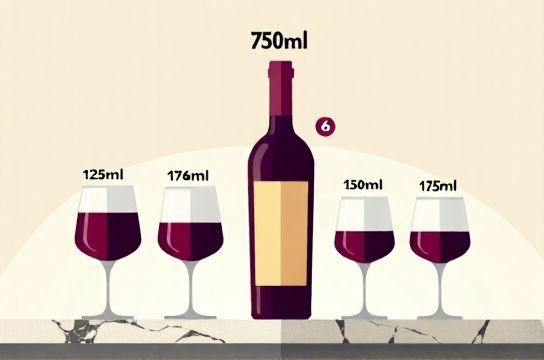
A 750ml bottle holds exactly 750 milliliters — no more, no less. But the number of servings hinges entirely on your target pour size. Here’s what the data shows:
| Pour Size (ml) | Glasses per 750ml Bottle | Industry Adoption Rate* | Why It Matters |
|---|---|---|---|
| 125 ml | 6.0 | 32% | EU standard; balances generosity & yield |
| 150 ml | 5.0 | 47% | U.S. restaurant norm; aligns with 5-oz label claim |
| 175 ml | 4.3 | 11% | UK pub standard; higher perceived value, lower margin |
| 100 ml (tasting) | 7.5 | 10% | Wine bar & education settings; maximizes bottle longevity |
*Source: 2024 Beverage Cost Benchmark Report (CMI Hospitality Analytics)
Notice something? A 25ml increase — from 150ml to 175ml — drops yield by nearly 14%. That’s not just one extra sip — it’s ~$2.10 in lost gross margin per bottle at a $14/glass average.
And here’s where most get tripped up: glassware ≠ pour size. A 20oz stem may *hold* 600ml, but if you’re aiming for 150ml, you need a measured pour spout or timed 4-second count (yes — timing works: 150ml ≈ 4 sec at gravity flow through a standard speed pourer).
If you're optimizing for both guest experience *and* profitability, start with consistency — not generosity. That means calibrating every station, training staff on visual cues (e.g., 'fill to the widest part of the bowl'), and auditing weekly. One client reduced variance from ±22% to ±4% in 6 weeks — lifting gross margin by 2.3 points.
For deeper guidance on portion discipline — including free printable pour-size templates and staff quiz tools — check out our wine service fundamentals toolkit. Because precision shouldn’t be reserved for sommeliers — it’s table stakes for every serious operator.