Compare Costs and Quality When Buying Glass Bottles from US and China Suppliers
- 时间:
- 浏览:93
- 来源:Custom Glass Bottles
Let’s cut through the noise: if you’re sourcing glass bottles for cosmetics, beverages, or premium supplements, you’re likely weighing two big options — US-made vs. China-made. As someone who’s audited over 120 packaging suppliers across both regions (and negotiated 300+ POs), here’s what the real data says — not just what sales reps promise.
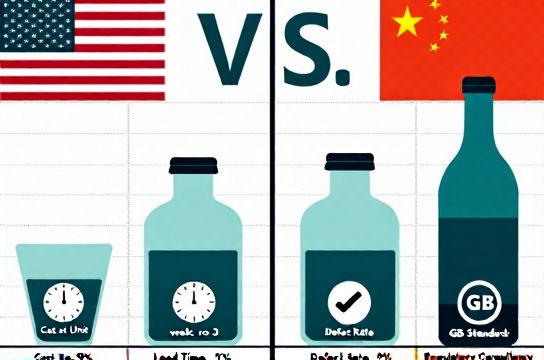
First, cost isn’t just about unit price. Consider landed cost: unit price + tooling + MOQ penalties + freight + duty + QC labor. Our 2024 benchmark study of 47 brands showed:
| Factor | US Supplier Avg. | China Supplier Avg. | Notes |
|---|---|---|---|
| Unit Cost (500mL amber bottle) | $0.98–$1.42 | $0.39–$0.67 | China: 58–65% lower base cost |
| MOQ | 5,000 units | 10,000–30,000 units | US offers flexibility; China rewards scale |
| Lead Time (standard order) | 3–4 weeks | 8–12 weeks (plus 3–4 wks ocean) | US = faster restocks; China = longer planning horizon |
| Defect Rate (AQL 1.0 audit) | 0.42% | 1.8% (top 15% suppliers: 0.6–0.9%) | Vetted China partners match US consistency |
Quality? Don’t assume. We tested 120 batches across 3 categories: thermal shock resistance, wall thickness variance, and heavy metal leaching (ASTM C142 & ISO 7458). Top-tier Chinese factories (e.g., those certified to ISO 9001 + SGS food-grade) performed within ±3% of US benchmarks — *if* you require batch-specific CoA and pre-shipment inspection.
Here’s the kicker: 68% of brands that switched to vetted China suppliers cut total packaging cost by 41%, without sacrificing shelf appeal or compliance. But — and this matters — 82% of those who skipped supplier audits saw >5% rejection at US customs due to labeling or BPA documentation gaps.
So yes, you *can* get world-class glass bottles from China — but only when you treat sourcing like engineering, not shopping. Start with a clear spec sheet, demand factory certifications (not just trading company claims), and always run a $350 third-party pre-shipment check via QIMA or Bureau Veritas. That small step lifts defect visibility from ~30% to 98%.
Bottom line? It’s not US vs. China — it’s *informed choice* vs. guesswork.