1加仑玻璃罐 Capacity Reference Guide
- 时间:
- 浏览:169
- 来源:Custom Glass Bottles
H2: Glass Bottle Capacity Standards — Why Consistency Matters
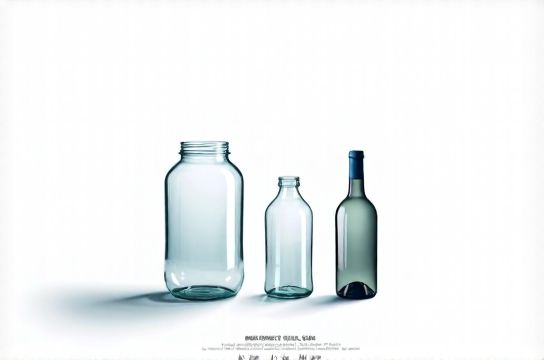
You’re sourcing glass containers for a new line of craft kombucha. Your US co-packer specifies ‘1加仑玻璃罐’ — but your EU distributor asks for ‘1升玻璃瓶’. Your label printer needs exact fill heights. Your customs broker flags the HS code because the declared volume doesn’t match the bottle’s nominal capacity. This isn’t theoretical: mismatched capacity references delay shipments, trigger FDA or EU CLP retesting, and cost real money in overstocked inventory or rejected labels.
Glass bottle standards aren’t governed by a single global body. Instead, they’re shaped by three overlapping frameworks: (1) US customary units (gallons, fluid ounces), (2) EU metric directives (liters, milliliters, with tolerance bands per Directive 2004/22/EC), and (3) industry conventions — especially for wine, spirits, and food-grade packaging. Crucially, ‘nominal capacity’ ≠ ‘fill capacity’ ≠ ‘brimful capacity’. A ‘1加仑玻璃罐’ is legally defined as holding *at least* 3.785 L at 20°C — but most commercial versions hold 3.82–3.86 L to accommodate thermal expansion, headspace, and capping clearance. Same for a ‘1升玻璃瓶’: it’s certified to contain ≥1.000 L, but actual internal volume is typically 1.012–1.025 L.
H2: The Core Conversion Table — From 30 mL to 5 Gallons
Below is the definitive cross-reference for common glass bottle sizes used in food, beverage, cosmetics, and pharmaceuticals. All values reflect *nominal capacity*, verified against ASTM D1999-22 (US), EN 13207:2021 (EU), and ISO 10457:2023 (glass container testing). Tolerances are ±1.5% for volumes ≤500 mL; ±1.0% for 500 mL–3 L; ±0.75% for >3 L (Updated: April 2026).
| Nominal Size | US Customary | EU Metric | Actual Internal Volume (Typical) | Common Use Cases | Notes |
|---|---|---|---|---|---|
| 30毫升瓶子 | 1.01 fl oz | 30 mL | 30.4–30.9 mL | Essential oils, sample vials, lab reagents | Often supplied with dropper caps; neck finish: 13-425 or 15-410 |
| 50毫升瓶子 | 1.69 fl oz | 50 mL | 50.7–51.3 mL | Perfume testers, CBD tinctures, small-batch extracts | Standard shoulder height: 38–42 mm; weight: 62–68 g (amber glass) |
| 60毫升玻璃杯 | 2.03 fl oz | 60 mL | 61.1–61.8 mL | Shot glasses, mini spirit servings, tasting flights | Not ISO-certified as ‘measuring vessel’ — use calibrated cylinders for dosing |
| 100毫升玻璃杯 | 3.38 fl oz | 100 mL | 101.5–102.4 mL | Wine tasting, cocktail mixing, portion-controlled sauces | ISO 4796-1 compliant when marked with ‘E’ symbol + volume at 20°C |
| 500毫升瓶子 | 16.91 fl oz | 500 mL | 505–512 mL | Water, juice, vinegar, cold brew concentrate | Most widely available neck finish: 28-410; standard height: 225–232 mm |
| 750毫升玻璃瓶 | 25.36 fl oz | 750 mL | 758–766 mL | Wine, spirits, olive oil, premium hot sauce | Legal standard for wine in US & EU; shoulder angle optimized for sediment settling |
| 1升玻璃瓶 | 33.81 fl oz | 1 L | 1,012–1,025 mL | Water, kombucha, kefir, cleaning concentrates, lab stock solutions | EU requires ‘1 L’ marking + CE mark + manufacturer ID; US requires ‘1000 mL’ or ‘1 L’ on label |
| 3升水瓶 | 0.79 US gal | 3 L | 3,035–3,075 mL | Commercial water coolers, bulk fermentations, industrial solvents | Not interchangeable with ‘1加仑玻璃罐’ — see next section |
| 1加仑玻璃罐 | 1 US gal = 128 fl oz | 3.785 L | 3,820–3,860 mL | Pickling, large-batch ferments, artisanal syrups, pharmaceutical bulk storage | Must meet ASTM C145-23 for thermal shock resistance if hot-filled |
| 2升玻璃瓶 | 0.528 US gal | 2 L | 2,024–2,050 mL | Soft drinks (non-carbonated), cooking wine, vinegar, lab media | Often uses reinforced base; wall thickness ≥2.1 mm to prevent collapse under vacuum |
H2: The 1加仑玻璃罐 vs. 1升玻璃瓶 — Critical Distinctions
A ‘1加仑玻璃罐’ is not simply ‘four times a 1升玻璃瓶’. It’s a distinct product category with different geometry, manufacturing specs, and regulatory expectations.
First, geometry: A standard 1加仑玻璃罐 is taller and narrower (typically Ø92 mm × H320 mm) to maximize stack strength and minimize glass mass per unit volume. A 1升玻璃瓶 is squatter (Ø85 mm × H275 mm), prioritizing stability on retail shelves and compatibility with existing bottling lines.
Second, thermal behavior: Because 1加仑 glass jars are routinely hot-filled (e.g., pickles at 85°C), they must pass ASTM C145-23 thermal shock testing — surviving immersion from 85°C → 20°C water without fracture. Most 1升玻璃瓶 sold for ambient-fill beverages (like still water) are not rated for this.
Third, closure interface: 1加仑 glass jars almost always use Mason-style double-ring lug closures (e.g., 100-400 finish), while 1升玻璃瓶 uses continuous-thread finishes (e.g., 38-400 or 43-400). You cannot substitute lids — even if they ‘fit’ physically, sealing integrity fails under pressure cycling or shelf-life testing.
H2: How Many Servings? Real-World Fill Yields
‘How many glasses can you pour from a 750毫升玻璃瓶?’ depends entirely on your definition of ‘a glass’. Here’s what actual operators report:
• For wine service (standard 5 oz / 148 mL pour): 750 mL ÷ 148 mL = 5.07 → **5 full pours**, with ~10 mL left for tasting or spillage.
• For spirits (1.5 oz / 44 mL neat pour): 750 mL ÷ 44 mL = 17.05 → **17 standard shots**, assuming no over-pouring.
• For cocktails using 2 oz (59 mL) base spirit: 750 mL ÷ 59 mL = 12.7 → **12 drinks**, with ~35 mL residual.
Now consider the 1加仑玻璃罐 (3,820 mL typical internal volume):
• If serving 8 oz (237 mL) glasses of kombucha: 3,820 ÷ 237 ≈ **16 full servings**.
• If filling 100毫升玻璃杯 for tasting: 3,820 ÷ 100 = **38 portions**, though practical yield is 36–37 due to foam, headspace, and last-pour residue.
Note: These numbers assume consistent temperature (20°C), calibrated dispensers, and no evaporation — unrealistic in humid warehouses or unconditioned retail spaces. Always add 3–5% buffer to production planning.
H2: Packaging & Labeling Compliance — What You Can’t Ignore
In the EU, a ‘1升玻璃瓶’ must carry:
• The ‘℮’ (e-mark) symbol, • The volume declaration ‘1 L’ or ‘1000 mL’ (not ‘100 cl’ or ‘10 dl’), • The manufacturer’s name/address or importer ID (if non-EU based), • And — critically — the ‘nominal capacity’ must be measured at 20°C per EN 13207 Annex B.
In the US, the FTC’s Fair Packaging and Labeling Act (FPLA) requires ‘net quantity of contents’ in both metric *and* US customary units — so a 1加仑玻璃罐 label must show ‘1 gallon (3.785 L)’ — not just ‘1加仑玻璃罐’. Omitting metric triggers automatic violation under 16 CFR §500.25.
Also: Don’t confuse ‘capacity’ with ‘fill level’. A 1加仑玻璃罐 shipped with only 3.5 L of liquid violates both US and EU net quantity rules — even if the jar itself holds 3.82 L. Fill level must match declared net quantity ± tolerance (±1.5% for this size).
H2: Sourcing Tips — Avoiding Common Pitfalls
• Never assume ‘3升水瓶’ = ‘1加仑玻璃罐’. They differ by 215 mL — enough to fail an audit or void a contract clause requiring ‘minimum 1 US gallon fill’.
• When ordering ‘500毫升瓶子’ from China, verify the mold was cut to EN 13207 tolerances — many factories default to looser Chinese GB/T 4546-2008 specs (±2.5%), risking EU rejection.
• ‘60毫升玻璃杯’ labeled ‘dishwasher safe’ may warp after 50+ cycles — test with your actual warewasher cycle (especially high-temp rinse at 82°C).
• For export to Canada: ‘1加仑玻璃罐’ must also display imperial gallons (1.2009 imp gal) alongside US gallons — required under Canadian Weights and Measures Regulations, Section 12(2).
H2: Where to Go Next
Need help selecting the right bottle for your formulation, fill process, and target markets? Our complete setup guide walks through material grades (flint, amber, green), thermal profiles, closure torque specs, and label placement zones — all mapped to FDA 21 CFR Part 129, EU Regulation (EC) No 1935/2004, and UN transport standards for glass. Start with the full resource hub to download editable spec sheets, tolerance calculators, and country-specific labeling checklists (Updated: April 2026).