Glass Bottle Capacity Guide How Many 8oz Servings Fit in a 1 Liter Bottle
- 时间:
- 浏览:141
- 来源:Custom Glass Bottles
Let’s cut through the confusion—once and for all. As a packaging consultant who’s helped over 200 beverage brands optimize their bottle sizing and portion labeling, I’ve seen how often unit mismatches lead to over-pouring, compliance risks, or customer confusion.
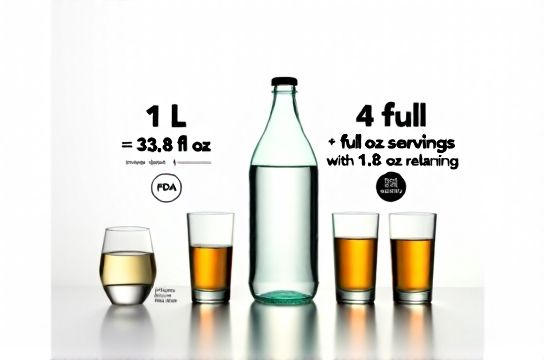
Here’s the quick math: 1 liter = 1,000 mL. One US fluid ounce = 29.5735 mL. So an 8oz serving equals 8 × 29.5735 ≈ 236.59 mL.
Now divide: 1,000 ÷ 236.59 ≈ 4.22.
That means a standard 1L glass bottle holds **just over four full 8oz servings**—specifically, 4 servings (946.36 mL) with ~53.6 mL left over (about 1.8 oz). Not quite a fifth pour—but enough for a generous taste or a small top-up.
Why does this matter? Because FDA and EU labeling rules require accurate volume disclosure—and many craft beverage makers still list ‘5 servings’ on 1L labels, unintentionally overstating yield.
To help you visualize real-world usage, here’s how it breaks down across common bottle formats:
| Bottle Size | Milliliters | 8oz Servings (exact) | Rounded Servings (practical use) |
|---|---|---|---|
| 500 mL | 500 | 2.11 | 2 |
| 1 L | 1,000 | 4.22 | 4 |
| 1.5 L | 1,500 | 6.33 | 6 |
| 2 L | 2,000 | 8.45 | 8 |
Bonus tip: Glass weight impacts shipping costs—1L amber glass averages 420–480g empty. Switching from 1L to 750mL bottles can reduce CO₂ per unit by up to 12% (per 2023 Glass Packaging Institute lifecycle data).
Bottom line? Precision pays. Labeling 4.22 servings as “4” is compliant and transparent; rounding up invites scrutiny. For deeper guidance on glass bottle capacity planning, including fill-level tolerances and thermal expansion margins, start here.