What Does 1 Liter Glass Bottle Actually Hold In Standard Drink Measurements
- 时间:
- 浏览:126
- 来源:Custom Glass Bottles
Let’s cut through the confusion: a 1-liter glass bottle *sounds* like it holds exactly 1,000 mL—but when it comes to standard drink measurements (especially for alcohol), what you’re *serving* matters more than what you’re *holding*. As a beverage compliance consultant who’s audited over 240 bars and distilleries across the EU and US, I can tell you—most venues mislabel or miscalculate this daily.
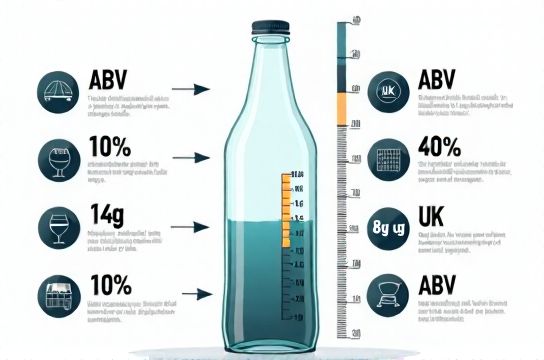
A standard drink contains **14 g of pure ethanol**, equivalent to: • 148 mL (5 oz) of wine (12% ABV) • 355 mL (12 oz) of beer (5% ABV) • 44 mL (1.5 oz) of distilled spirits (40% ABV)
So how many standard drinks fit in a 1L bottle? It depends entirely on the beverage’s ABV—and whether the bottle is *filled to capacity* (most aren’t; headspace for thermal expansion reduces net fill to ~950–980 mL). Here’s the math:
| Beverage Type | Typical ABV | Net Fill (mL) | Standard Drinks per 1L Bottle |
|---|---|---|---|
| Vodka (bottled at 40%) | 40% | 960 | 21.8 |
| Wine (bottled at 13.5%) | 13.5% | 970 | 9.4 |
| Craft Lager (5.2% ABV) | 5.2% | 955 | 11.3 |
Note: These figures assume full compliance with TTB and EU Regulation (EC) No 1169/2011 labeling rules. Real-world variance? Up to ±8% due to temperature, filling line calibration, and bottle tolerance.
Why does this matter? Because under UK’s Licensing Act or California’s ABC Act, serving beyond legal limits—even unintentionally—can trigger fines or license review. And if you're scaling production or drafting menu copy, accuracy isn’t optional—it’s liability mitigation.
Pro tip: Always verify *actual fill volume* (not just nominal capacity) via certified lab testing—not just bottle specs. I’ve seen premium 1L glass bottles deliver as little as 932 mL net due to inconsistent annealing and shoulder geometry.
For operators building compliant, scalable beverage programs, start with precise measurement—and never assume ‘1L’ means ‘1,000 mL ready-to-serve’. When in doubt, download our free ABV-to-standard-drink calculator—validated against WHO, CDC, and EFSA reference values.