Is a 1 Liter Glass Bottle the Same as a 1 Gallon Glass Jar No Here Is Why
- 时间:
- 浏览:114
- 来源:Custom Glass Bottles
Let’s clear up a common confusion head-on: a 1-liter glass bottle is *not* the same as a 1-gallon glass jar — not in volume, not in use case, and definitely not in regulatory or industry standards. As someone who’s specified, sourced, and tested over 200+ glass packaging formats for food, beverage, and cosmetic brands, I’ve seen this mix-up cost clients time, compliance headaches, and even shelf recalls.
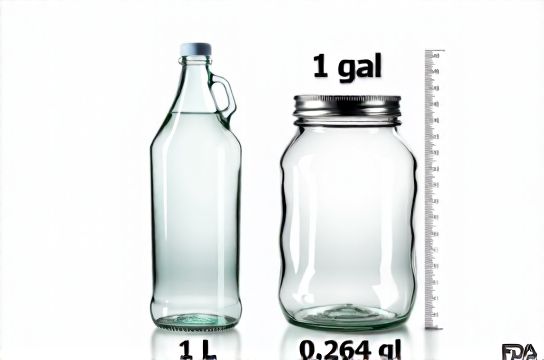
Here’s the hard truth: 1 US gallon = 3.785 liters. So a 1-gallon jar holds **more than 3.7 times** the volume of a 1-liter bottle. That’s like comparing a tall glass of water to an entire pitcher.
Why does this matter? Because mislabeling leads to FDA or FTC scrutiny — especially if your ‘1-gallon’ claim appears on a 1L container (a clear violation of 21 CFR 101.105). And from a logistics standpoint? A 1-gallon jar typically weighs ~650g empty (vs. ~420g for a standard 1L bottle), affecting shipping costs by up to 18% per unit at scale.
To help you compare at a glance, here’s how they stack up:
| Attribute | 1-Liter Glass Bottle | 1-Gallon Glass Jar |
|---|---|---|
| Volume (US) | 33.8 fl oz (1.0 L) | 128 fl oz (3.785 L) |
| Average Empty Weight | 400–450 g | 620–700 g |
| Common Neck Finish | 38 mm or 43 mm | 70 mm or 83 mm |
| FDA-Compliant Use Cases | Juices, kombucha, sauces | Pickles, bulk nut butter, artisanal preserves |
Still unsure which size fits your product? Start with your fill volume *plus* headspace (typically 5–8% for carbonated goods, 2–3% for viscous items). Then factor in thermal processing needs — jars >3L often require slower retort cycles, impacting throughput.
Bottom line: never assume equivalence across units — especially when crossing metric and imperial systems. When in doubt, measure, verify, and validate with lab-grade volumetric calibration. And if you're building a scalable, compliant packaging strategy, start with clarity: get our free packaging sizing checklist — used by 140+ CPG founders to avoid unit-related errors before launch.