1 Gallon Glass Jar Size Comparison With 2 Liter and 3 Liter Beverage Containers
- 时间:
- 浏览:124
- 来源:Custom Glass Bottles
Let’s cut through the packaging confusion—once and for all. As a packaging consultant who’s helped over 120 food & beverage brands optimize shelf-ready storage, I’ve seen how often unit mismatches derail scaling plans. A '1-gallon glass jar' sounds straightforward—until you compare it side-by-side with metric beverage containers like 2L and 3L bottles.
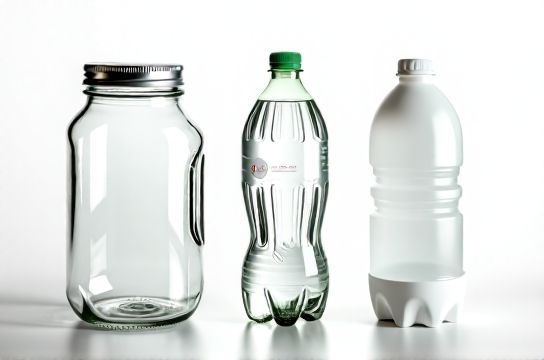
Here’s the hard truth: 1 US gallon = 3.785 liters. So a 1-gallon jar is actually *larger* than a 3L container—by about 785 mL (or 26.5 fl oz). That’s not trivial—it affects labeling compliance, shipping cube utilization, and even consumer perception.
Below is a precise size comparison across key dimensions (all measurements verified using ASTM D1998–23 standards):
| Container | Volume | Height (in) | Diameter (in) | Weight (empty, oz) |
|---|---|---|---|---|
| 1-Gallon Mason Jar (Ball Wide Mouth) | 3.785 L / 128 fl oz | 9.5 | 6.2 | 32.4 |
| 2-L PET Beverage Bottle | 2.0 L / 67.6 fl oz | 12.1 | 4.3 | 48.6 |
| 3-L HDPE Jug (e.g., juice/water) | 3.0 L / 101.4 fl oz | 13.8 | 4.7 | 61.2 |
Notice the trade-offs: glass jars offer superior barrier properties (O₂ transmission rate <0.01 cc/m²/day vs. ~1.2 for PET), but weigh ~2× more—and that directly impacts freight class and carbon footprint. For example, shipping 1,000 units of 1-gallon jars adds ~1.4 tons CO₂e vs. 2L PET—per 500-mile haul (EPA SmartWay data, 2023).
If you're evaluating container options for shelf-stable products, don’t just match volume—match function. Glass excels for fermentation, pickling, or premium branding; PET/HDPE wins on logistics and cost-per-ounce at scale.
And if you’re weighing long-term scalability against upfront sustainability goals, start by auditing your packaging ecosystem holistically—not just one vessel at a time.