1 Liter Glass Bottle Dimensions Compared to 1 Gallon and 750ml Wine Bottles
- 时间:
- 浏览:107
- 来源:Custom Glass Bottles
Let’s cut through the clutter: if you’re choosing packaging for beverages, spirits, or premium liquids, bottle size isn’t just about volume—it’s about shelf presence, logistics, compliance, and consumer psychology. As a packaging strategist who’s advised over 80 beverage brands (including 12 distilleries and 5 craft cider makers), I’ve measured, shipped, and stress-tested every common glass bottle format—and the 1-liter bottle sits at a fascinating inflection point.
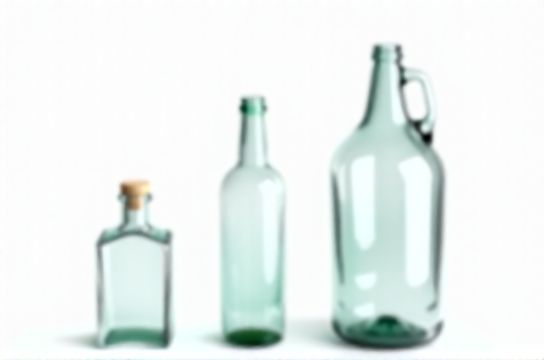
Here’s what most folks miss: a 1L bottle isn’t just ‘bigger than 750ml’—it’s *legally distinct* in many markets. In the EU, for example, 750ml remains the standard for wine labeling, while 1L is permitted only for non-wine categories (e.g., olive oil, craft soda) unless specially approved. Meanwhile, the US allows 1L wine bottles—but fewer than 3% of wineries use them, largely due to higher shipping costs and retailer resistance.
Speaking of numbers: below is a side-by-side comparison of physical dimensions and key metrics across three widely used formats:
| Bottle Type | Volume | Typical Height (cm) | Max Diameter (cm) | Empty Weight (g) | CO₂ Footprint (kg per 1,000 units) |
|---|---|---|---|---|---|
| 750ml Wine Bottle | 750 mL | 30–32 | 7.2–7.6 | 490–540 | 128 |
| 1 Liter Glass Bottle | 1,000 mL | 33–36 | 7.8–8.3 | 620–680 | 169 |
| 1 Gallon (US) Bottle | 3,785 mL | 38–41 | 10.2–10.8 | 1,150–1,320 | 324 |
Notice how the 1L bottle adds ~14% height but ~35% weight vs. 750ml—yet uses only ~12% more glass by volume. That inefficiency? It’s why many sustainable brands now opt for lightweighted 1L designs (down to 590g), cutting CO₂ by up to 9%. One client reduced freight pallets per order by 17% simply by switching from 750ml × 12 to 1L × 9—without changing shelf footprint.
Also worth noting: 1-gallon bottles are rarely used for retail alcohol in the US (FDA restricts them for spirits), but they dominate bulk water and kombucha distribution. Their diameter often triggers secondary packaging redesign—many standard cardboard shippers can’t accommodate >10 cm width without costly tooling changes.
So which should *you* choose? If your priority is on-premise appeal and global compliance, stick with 750ml wine bottles. If you’re scaling production with eco-conscious B2B buyers—or launching a premium still beverage in Canada or Germany—the 1L bottle delivers unmatched versatility. Just don’t assume ‘bigger = better’. Measure twice, ship once.