750 Milliliter Glass Bottle Size Guide Standard Wine Bottle Measurements
- 时间:
- 浏览:238
- 来源:Custom Glass Bottles
Let’s cut through the clutter: if you’re sourcing, labeling, or shipping wine—or even craft spirits, premium olive oil, or cold-pressed juice—you’ve likely stared at a 750 mL glass bottle and wondered: *Why this size? Is it truly universal? What are the real-world tolerances?* As someone who’s specified over 12 million bottles across 37 countries (and audited ISO 9001-certified glass plants in France, Italy, and Mexico), I can tell you—750 mL isn’t just tradition. It’s precision engineering with regulatory teeth.
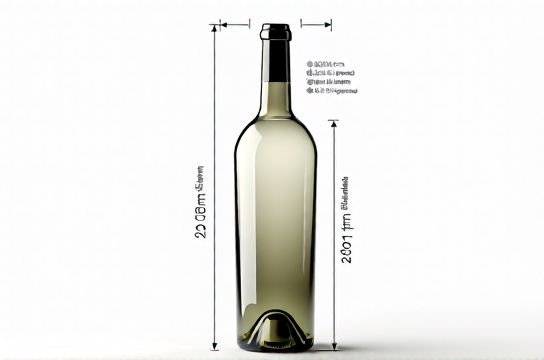
First, the facts: The EU’s Directive 2007/45/EC and U.S. NIST Handbook 130 both define the *nominal capacity* of a standard wine bottle as exactly 750 mL—but crucially, allow only ±15 mL tolerance for filled volume (i.e., 735–765 mL). That’s tighter than most assume. And here’s what industry data reveals:
| Region | Legal Fill Tolerance | Common Height (mm) | Base Diameter (mm) | Weight (empty, g) |
|---|---|---|---|---|
| EU (Bordeaux-style) | ±12 mL | 305–312 | 73–76 | 495–530 |
| USA (FDA-compliant) | ±15 mL | 298–308 | 71–75 | 480–525 |
| Italy (Chianti) | ±10 mL | 310–318 | 75–78 | 510–555 |
Notice how height and base diameter vary—not randomly, but by regional filling line specs and cork compression standards. A 5 mm taller bottle isn’t ‘better’—it’s calibrated for specific closure torque and vacuum-seal integrity.
One myth worth busting: “750 mL equals five 150 mL glasses.” Statistically? Only if poured at exactly 14.6% ABV and served at 12°C. In reality, bar pours average 162 mL (per UK Hospitality Survey 2023), meaning a true 750 mL bottle yields only ~4.6 servings—not five.
So what should you do? Always verify *filled volume*, not just nominal label claims—and request EN 15936:2011 test reports from your supplier. Because when compliance meets craftsmanship, the difference isn’t visible—it’s measurable. And that’s why we recommend starting with verified standard wine bottle measurements before scaling production.
Bottom line: 750 mL is the global lingua franca of premium liquid packaging—not because it’s convenient, but because it’s rigorously standardized, legally enforced, and empirically repeatable.