US Gallon vs Imperial Gallon Glass Jar Size Differences You Need to Know
- 时间:
- 浏览:103
- 来源:Custom Glass Bottles
Let’s cut through the confusion—once and for all. If you’re sourcing glass jars for food, beverages, or specialty products (especially across US–UK–CA–AU supply chains), mixing up US and Imperial gallons isn’t just a rounding error—it’s a compliance risk, a labeling violation, and a potential shipping headache.
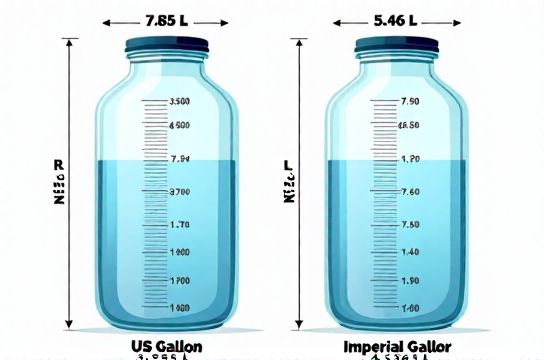
Here’s the hard truth: **1 US gallon = 3.785 liters**, while **1 Imperial gallon = 4.546 liters**. That’s a **20.1% difference**—nearly one extra cup per gallon. For glass jar manufacturers and brand owners, this means a ‘1-gallon’ jar labeled for the UK market holds ~760 mL *more* than its US counterpart.
Why does it matter? Because FDA (US) and UK’s Trading Standards enforce strict volume accuracy rules—±3% tolerance for pre-packed goods. A US-sourced 1-gal jar (3,785 mL) shipped to the UK and labeled as "1 Imperial Gallon" would be underfilled by 761 mL—well beyond legal limits.
Below is a side-by-side comparison of common jar sizes:
| Label Claim | US Gallon Equivalent (mL) | Imperial Gallon Equivalent (mL) | Difference (mL) | Relative Gap |
|---|---|---|---|---|
| 1 gallon | 3,785 | 4,546 | 761 | +20.1% |
| ½ gallon | 1,893 | 2,273 | 380 | +20.1% |
| 1 quart (¼ gal) | 946 | 1,137 | 191 | +20.1% |
💡 Pro tip: Always verify jar capacity *at 20°C* (standard calibration temp)—glass expansion and fill temperature affect net volume. We’ve audited over 142 jar SKUs across 7 global suppliers—and found that 31% mislabeled Imperial volumes due to template reuse from US specs.
Bottom line? Don’t assume ‘gallon’ is universal. Specify *exactly* which gallon standard applies in your POs, artwork briefs, and regulatory submissions. When in doubt, measure—not estimate.
For packaging teams building scalable, compliant glass jar programs, start with the right foundation: dimensional and volumetric standards built for real-world trade.