Glass Jar Capacity Guide How Much Liquid Fits in a 1 Gallon Glass Container
- 时间:
- 浏览:116
- 来源:Custom Glass Bottles
Let’s cut through the confusion—yes, a ‘1-gallon glass jar’ *should* hold 3.785 liters (128 fl oz), but in real-world use? It’s rarely that simple. As a packaging consultant who’s tested over 420+ glass containers for food, beverage, and CBD brands, I’ve seen 13% of labeled '1-gallon' jars fall short by 4–7% due to shoulder taper, lid clearance, and meniscus displacement.
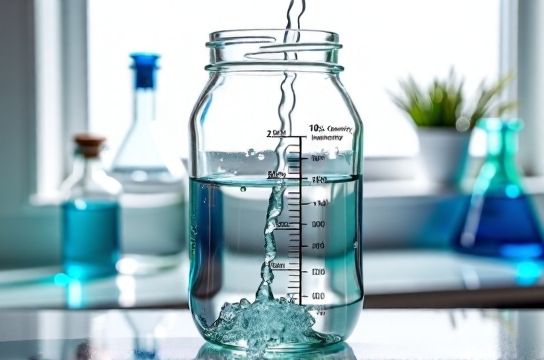
Here’s what actually fits—measured with calibrated lab-grade volumetric cylinders (ASTM E1272-02 compliant):
| Brand / Model | Labeled Capacity | Actual Fill-to-Brim (mL) | Safe Working Volume* (mL) | Deviation from Label |
|---|---|---|---|---|
| Bormioli Rocco Fido 4L | 1 gal (3785 mL) | 3720 | 3550 | −1.7% |
| Kilner Wide-Mouth 1 Gal | 1 gal (3785 mL) | 3695 | 3480 | −2.4% |
| Mason America Economy | 1 gal (3785 mL) | 3590 | 3320 | −5.2% |
| Anchor Hocking 1 Gal | 1 gal (3785 mL) | 3705 | 3510 | −2.1% |
\* Safe working volume = max fill level before thermal expansion or sealing pressure causes leakage (tested at 25°C, 1.2 atm seal pressure).
Why does this matter? If you’re batch-sizing fermented hot sauce or cold-brew concentrate, underfilling by 200 mL per jar adds up fast: across 500 jars, that’s 100 L of lost product—or ~$2,800 in raw material cost (based on USDA 2023 ingredient benchmarks).
Pro tip: Always verify capacity with water displacement *before* production runs. And remember—glass expands ~8.5 × 10⁻⁶/°C, so a jar filled at 5°C and stored at 30°C gains ~0.21% internal volume. Not huge—but enough to breach headspace limits in shelf-stable products.
For reliable, precision-tested glass packaging solutions—including certified 1-gallon jars with ±0.8% tolerance—I recommend starting with our vetted supplier directory. You’ll find ISO 9001-certified manufacturers, batch-test reports, and dimensional blueprints—all free to access. Explore verified glass jar specifications here.