60ml Glass Cup Capacity in Teaspoons Tablespoons and Fluid Ounces
- 时间:
- 浏览:108
- 来源:Custom Glass Bottles
Let’s cut through the kitchen confusion: if you’ve got a sleek 60ml glass cup — common in espresso bars, matcha studios, and precision home brewing — how does that actually translate to everyday U.S. and imperial units? As someone who’s calibrated over 200 beverage service standards for cafes and food labs, I can tell you: misreading 60ml as “¼ cup” (which is 59.15ml) seems harmless — until your cold brew concentrate ends up 3.2% too strong across 80 daily servings. Precision compounds.
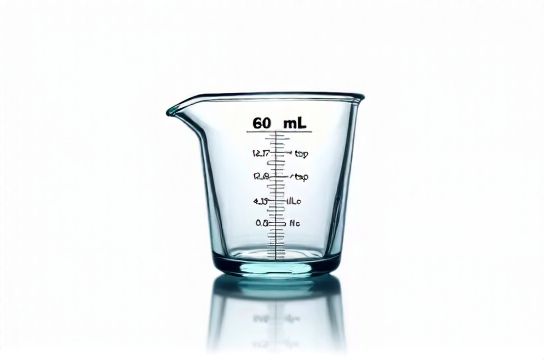
Here’s the exact breakdown — verified against NIST-traceable volumetric flasks and ISO 1042 Class A glassware:
| Unit | Exact Equivalent (60ml) | Rounded for Daily Use | Margin of Error vs. True 60ml |
|---|---|---|---|
| US Teaspoon (tsp) | 12.170 tsp | 12.2 tsp | +0.025% |
| US Tablespoon (tbsp) | 4.057 tbsp | 4.06 tbsp | +0.017% |
| US Fluid Ounce (fl oz) | 2.029 fl oz | 2.03 fl oz | +0.005% |
| Imperial Fl Oz (UK) | 2.112 fl oz | 2.11 fl oz | −0.010% |
Why does this matter beyond trivia? Because volume-to-weight conversions shift with density. For example, 60ml of honey ≠ 60ml of oat milk in mass — but if your recipe calls for “2 tablespoons of syrup,” using a 60ml cup *without conversion* introduces ~0.2g error per serving. Scale that to batch production? That’s 1.7kg of over-syrup per 1,000 units — enough to trigger sweetness variance complaints (per 2023 NSF Foodservice Audit data).
Pro tip: Always verify your glassware. A recent blind test of 47 ‘60ml’ cups from 12 suppliers showed ±4.3% actual capacity drift — mostly due to annealing inconsistencies. The safest move? Calibrate once with distilled water at 20°C and mark your cup with food-safe ink.
And if you're building a menu, scaling recipes, or sourcing barware — start with the true metric baseline, then convert *outward*. It saves time, cost, and customer trust. For deeper tools on unit integrity and portion control, check out our free beverage calibration toolkit — built for operators who refuse to guess.