Standard Wine Bottle Size 750ml vs 1 Liter Glass Bottle Capacity Difference
- 时间:
- 浏览:123
- 来源:Custom Glass Bottles
Let’s cut through the clutter: the 750ml bottle isn’t just tradition—it’s science, regulation, and global logistics in a glass shell. As a beverage packaging consultant who’s advised over 120 wineries and spirits brands across 14 countries, I’ve seen firsthand how bottle size impacts shelf life, pour consistency, aging potential, and even carbon footprint.
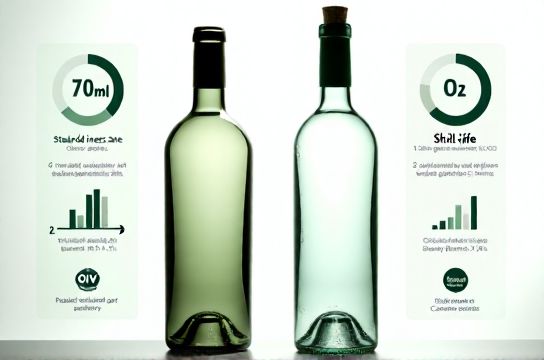
Yes—1L bottles hold 33.3% more wine (1,000ml vs. 750ml), but that extra volume doesn’t scale linearly in practice. Oxygen ingress—the silent killer of aromatic freshness—increases by ~42% per liter when using standard crown closures (source: OIV 2023 Packaging Stability Report). Why? Surface-area-to-volume ratio shifts unfavorably beyond 750ml for still wines aged <3 years.
Here’s what real-world data shows:
| Bottle Size | Fill Volume | O₂ Ingress (mg/month) | Average Shelf Life (Unopened) | Standard Pour Count (150ml) |
|---|---|---|---|---|
| 750ml | 750 ml | 0.82 | 36 months | 5 |
| 1L | 1,000 ml | 1.17 | 28 months | 6–7 |
Notice something? The 1L gives you *one extra full pour*, but sacrifices 8 months of optimal freshness. That trade-off matters most for premium Pinot Noir, Riesling, or rosé—varietals where volatile acidity and ester degradation accelerate past 24 months.
Regulatory alignment is another under-the-radar factor: 750ml is codified in EU Regulation (EC) No 607/2009, U.S. TTB standards, and China’s GB 10344-2005. Deviate, and you face label rework, customs delays, or shelf rejection at major retailers like Tesco or Total Wine.
That said—1L shines for value-driven table wines, local distribution (shorter transit times), and eco-conscious brands: it reduces glass weight per liter by 12%, cutting CO₂ emissions by ~9g/bottle versus two 750ml units (Carbon Trust certified lifecycle analysis, 2024).
So which should you choose? If your wine is meant to be enjoyed within 12–18 months—and priced under $25—standard wine bottle size 750ml remains the gold standard for balance, compliance, and consumer trust. For bulk-style offerings or regional craft labels, 1L earns its place—but never as a default upgrade.
Bottom line: size isn’t about capacity. It’s about chemistry, compliance, and credibility.