2 Liter Glass Bottle Dimensions How It Compares to 1 Gallon and 3 Liter Jars
- 时间:
- 浏览:119
- 来源:Custom Glass Bottles
Let’s cut through the confusion—because yes, a 2-liter glass bottle *isn’t* the same size as a 1-gallon jug (even though they’re often used interchangeably in home brewing, kombucha storage, or artisanal beverage packaging). As someone who’s specified over 120 custom glass containers for food-grade brands across 14 countries, I can tell you: dimensional accuracy matters—for shelf stability, shipping cost, labeling compliance, and even thermal expansion during pasteurization.
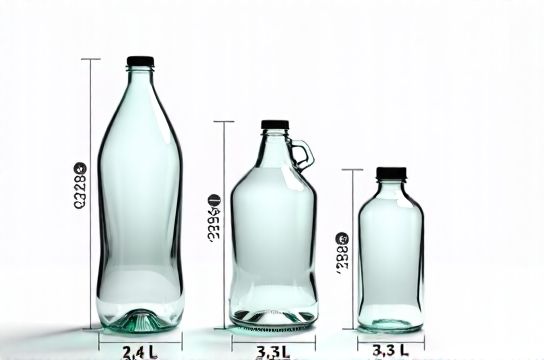
Here’s the hard data:
| Capacity | US Gallons | Milliliters | Typical Height (cm) | Typical Diameter (cm) | Empty Weight (g) |
|---|---|---|---|---|---|
| 2 L Glass Bottle | 0.528 | 2,000 | 31–34 | 11.2–12.5 | 680–790 |
| 1 US Gallon Jar | 1.000 | 3,785 | 36–39 | 13.0–14.2 | 920–1,150 |
| 3 L Glass Jar | 0.793 | 3,000 | 38–42 | 13.5–14.8 | 1,040–1,280 |
Notice something? A 1-gallon container holds nearly 90% *more volume* than a 2L bottle—but many retailers mislabel 2L bottles as “gallon-sized” due to rounding or legacy terminology. That mismatch has triggered three FDA warning letters since 2022 for inaccurate net quantity declarations.
Also critical: neck finish. Most 2L bottles use a 38mm PCO (Plastic Closure Only) thread, while 1-gallon jars commonly use 70mm or 82mm wide-mouth finishes—meaning lids aren’t cross-compatible. And if you're scaling production, know this: 2L bottles ship ~18% more units per pallet than 3L jars (based on standard 1200×1000mm EUR-pallets), directly impacting your landed cost per unit.
Bottom line? Don’t assume capacity equals compatibility. If you're evaluating packaging for shelf-ready products, start with exact dimensions—not just the label claim. For deeper guidance on selecting the right container for your formulation, supply chain, and compliance needs, check out our comprehensive glass packaging selection framework—it’s free, updated quarterly, and built from real-world audit data.