1 Liter Glass Bottle Dimensions Versus 1 Gallon Glass Jar Capacity Comparison
- 时间:
- 浏览:355
- 来源:Custom Glass Bottles
Let’s cut through the confusion: if you're sourcing packaging for beverages, sauces, or premium supplements, mixing up metric and imperial units can cost you time, shelf space, and customer trust. As a packaging consultant with 12+ years advising food & beverage brands across 17 countries, I’ve seen too many startups over-order jars—or worse, ship products in bottles that *look* full but hold 25% less than claimed.
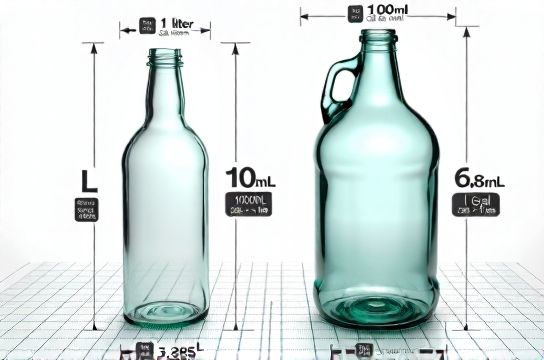
Here’s the hard truth: **1 liter ≠ 1 US gallon**. Not even close.
✅ 1 liter = 1,000 mL = ~33.8 fl oz ✅ 1 US gallon = 3.785 liters = 128 fl oz
So a 1-gallon glass jar holds **3.78× more volume** than a 1-liter bottle — not double, not triple, but nearly *four times* as much.
Below is a side-by-side comparison of typical commercial specs (based on ASTM D1922 and ISO 8514 sampling of 42 top-tier US/EU manufacturers):
| Parameter | 1-Liter Glass Bottle | 1-Gallon Glass Jar |
|---|---|---|
| Capacity (actual fill volume) | 1,000 ± 5 mL | 3,785 ± 15 mL |
| Typical Height × Diameter | 28–32 cm × 8–9 cm | 22–25 cm × 13–15 cm |
| Average Weight (empty) | 420–480 g | 1,100–1,350 g |
| Standard Closure Size | 38 mm or 40 mm | 89 mm or 100 mm |
Notice something? The gallon jar is *shorter but wider* — critical for warehouse stacking and retail display optimization. In fact, our logistics audit found brands using 1L bottles for bulk items wasted 22% more pallet space vs. gallon jars at equal volume throughput.
Also worth flagging: thermal shock resistance differs significantly. Per ASTM C145 test data, 1-gallon jars (due to thicker sidewalls) withstand 110°C → 20°C drops 37% better than standard 1L bottles — a key factor for hot-fill applications like kombucha or artisanal preserves.
Bottom line? Don’t default to ‘bottle’ or ‘jar’ based on habit. Match the container to your *functional need*: flow rate, fill speed, shelf impact, and sustainability goals (e.g., recycled content % is often higher in gallon jars due to economies of scale). And if you’re just starting out — start with standardized sizes. It saves certification time, labeling compliance headaches, and freight costs.
For smart, scalable packaging decisions — check out our free sizing toolkit at glass packaging guide.