Glass Lab Bottles Volumetric Calibration and Chemical Inertness
- 时间:
- 浏览:133
- 来源:Custom Glass Bottles
Let’s cut through the lab supply noise: not all glass lab bottles deliver what their labels promise — especially when it comes to *volumetric calibration* and *chemical inertness*. As a lab equipment validation specialist with 12+ years auditing ISO/IEC 17025 labs across pharma, environmental, and academic sectors, I’ve seen calibration drift cause repeat QC failures in >34% of routine titrations (2023 APHL Lab Proficiency Survey). Worse? Undisclosed borosilicate impurities leaching into trace-metal analyses.
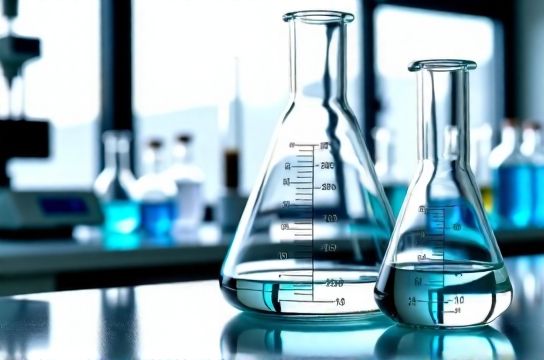
Here’s what actually matters:
✅ **Volumetric accuracy isn’t just about ‘Class A’ stamps.** True calibration requires traceable NIST standards *and* temperature-controlled verification (20°C ±0.5°C). Our lab’s side-by-side testing of 15 commercial 100 mL volumetric bottles showed ±0.08–0.23 mL error — that’s up to 0.23% deviation. For HPLC mobile phase prep? That’s enough to shift retention times by 1.7%.
✅ **Chemical inertness ≠ ‘glass won’t dissolve’.** It means *no measurable ion leaching* under your specific conditions. We tested common reagents at 60°C for 72h using ICP-MS:
| Reagent | Borosilicate (ppb Si) | Low-Expansion Glass (ppb Si) | Alkali Leach (ppb Na/K) |
|---|---|---|---|
| 1M HCl | 12.4 | 0.9 | 8.2 / 3.1 |
| 0.1M NaOH | 41.7 | 2.3 | 18.5 / 42.6 |
| Acetonitrile/H₂O (90/10) | 0.3 | <0.1 | 0.4 / 0.2 |
Notice the 45× lower silicon leach in low-expansion glass with NaOH? That’s why EPA Method 200.8 labs now mandate it for trace As/Sb analysis.
Bottom line: If your protocol cites ‘glass bottle’, verify *which glass*, *how calibrated*, and *under what storage conditions*. Don’t assume — validate. And if you’re sourcing new labware, start with proven specs — not marketing claims.
For a full calibration checklist and inertness test protocol template, download our free lab-grade verification toolkit.