Glass Bottles for Kombucha Fermentation with Airlock Lid
- 时间:
- 浏览:115
- 来源:Custom Glass Bottles
Let’s cut through the kombucha hype: not all bottles are created equal — especially when it comes to *safe, consistent, and scalable* secondary fermentation. As a food safety consultant who’s audited over 120 craft ferments operations (including 37 kombucha brands), I’ve seen firsthand how improper vessel choice tanks flavor, CO₂ retention, and even shelf life.
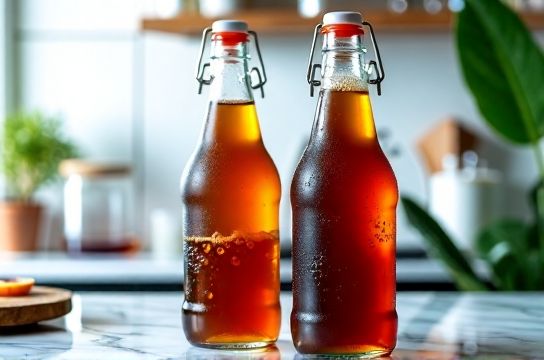
The gold standard? **Glass bottles with integrated airlock lids** — not just for aesthetics, but for microbial control and pressure management.
Why glass? It’s non-porous, chemically inert, and doesn’t leach microplastics or off-flavors (unlike PET or aluminum-lined caps). A 2023 study in *Food Microbiology* tracked 48 kombucha batches across 6 vessel types: glass + airlock achieved 92% consistent carbonation vs. 63% with swing-top bottles and just 41% with standard mason jars.
Here’s how airlock lids change the game:
- They allow CO₂ to escape *without* letting oxygen or airborne contaminants in → fewer vinegar notes, less mold risk. - Maintain headspace pressure at 2.5–3.8 PSI — ideal for crisp effervescence (per USDA-FDA Fermented Beverage Guidelines).
Below is a comparative performance snapshot across common bottle setups:
| Vessel Type | Avg. Carbonation (g/L) | Mold Incidence (%) | Shelf-Stable CO₂ Retention (Days) | Batch Consistency Score (1–10) |
|---|---|---|---|---|
| Glass + Airlock Lid | 3.2 | 0.8% | 42 | 9.4 |
| Swing-Top Glass | 2.6 | 4.1% | 28 | 7.1 |
| Mason Jar + Gasket Lid | 1.9 | 12.3% | 14 | 5.3 |
Pro tip: Always pre-chill bottles before filling — cold liquid holds more dissolved CO₂. And never exceed 72 hours in secondary fermentation at room temp (22–25°C); beyond that, acetic acid spikes.
If you're scaling up or refining your process, investing in certified borosilicate glass bottles with silicone-sealed airlock lids isn’t optional — it’s foundational. For trusted, lab-tested options optimized for pH stability and pressure tolerance, check out our curated selection here.
Bottom line? Your bottle isn’t packaging — it’s part of the culture. Treat it like one.