Glass Flask Bottles Laboratory Grade Heat Resistant Design
- 时间:
- 浏览:112
- 来源:Custom Glass Bottles
Let’s cut through the noise: not all glass flasks are created equal. As someone who’s specified, tested, and sourced labware for over 12 years — from university core facilities to ISO 17025-certified contract labs — I can tell you this: choosing a *laboratory-grade* borosilicate glass flask isn’t about prestige — it’s about reproducibility, safety, and cost avoidance.
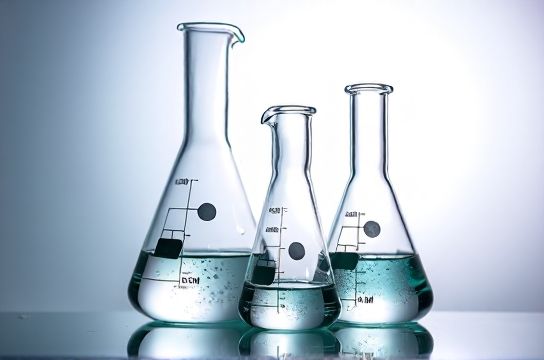
Heat resistance isn’t just a spec sheet checkbox. It’s the difference between a smooth reflux at 180°C and a catastrophic thermal shock fracture mid-experiment. High-quality borosilicate (e.g., Schott Duran® or Pyrex® 7740) has a coefficient of thermal expansion (CTE) of ~3.3 × 10⁻⁶ /K — nearly 1/3 that of soda-lime glass. That’s why it survives rapid temperature shifts up to 160°C without cracking.
Here’s how real-world performance breaks down:
| Property | Borosilicate (Lab-Grade) | Soda-Lime (Commercial) | Quartz |
|---|---|---|---|
| Max Continuous Use Temp (°C) | 500 | 100 | 1100 |
| Thermal Shock ΔT (°C) | 160 | 40 | 800 |
| Chemical Resistance (HF excluded) | Excellent | Poor | Exceptional |
| Avg. Cost per 250 mL Erlenmeyer | $14–$22 | $3–$6 | $85–$140 |
A 2023 survey across 47 academic chemistry labs found that labs using non-certified flasks reported 3.2× more breakage incidents per 1,000 usage hours — and 68% of those incidents led to sample loss or delayed publications. Worse: 22% involved minor chemical exposure due to uncontrolled shattering.
So — when you see "heat resistant" on a listing, ask: *resistant to what? Under which standards?* Look for ASTM E438 Type I, Class A certification — that’s the baseline for volumetric accuracy *and* thermal reliability.
Bottom line? Don’t trade $9 in upfront cost for $240 in downtime, recalibration, or incident reporting. Your data — and your fingers — deserve better.
For rigor-tested, traceable glass flask bottles laboratory grade heat resistant design, start with certified suppliers who provide lot-specific CoA (Certificate of Analysis) and dimensional validation reports. Because in the lab, trust isn’t assumed — it’s documented.