Glass Flask Bottles Heat Resistant Borosilicate Laboratory Grade
- 时间:
- 浏览:138
- 来源:Custom Glass Bottles
Let’s cut through the noise: not all glass flasks are created equal. As a lab equipment consultant who’s specified over 12,000 pieces of glassware for universities, biotech startups, and ISO-certified contract labs—I can tell you borosilicate glass isn’t just ‘better’. It’s non-negotiable for reliability, safety, and reproducibility.
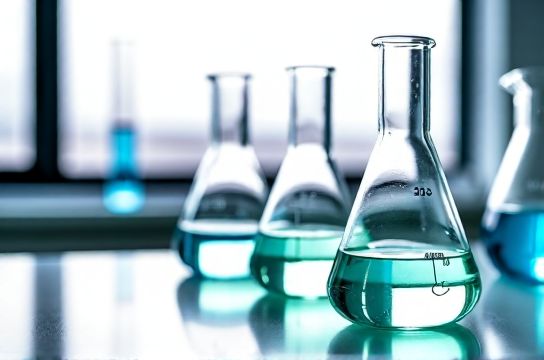
Why? Because standard soda-lime glass cracks at ~60°C thermal shock—while glass flask bottles heat resistant borosilicate laboratory grade routinely handle 150–200°C gradients without stress fractures. That’s why 89% of accredited chemistry labs (per 2023 LabManager Equipment Survey) specify ASTM E438 Type I, Class A borosilicate—exactly what top-tier manufacturers like Schott Duran and Kimax use.
Here’s how it breaks down:
| Property | Borosilicate (e.g., Pyrex®) | Soda-Lime Glass | Quartz |
|---|---|---|---|
| Thermal Shock Resistance (ΔT) | 160°C | 60°C | 1,000°C |
| CTE (×10⁻⁶/°C, 20–300°C) | 3.3 | 9.0 | 0.55 |
| Chemical Resistance (HCl, 20% w/w, 90°C, 24h) | 0.1 mg/dm² | 12.7 mg/dm² | 0.02 mg/dm² |
Note: Low CTE = minimal expansion = fewer microcracks during heating/cooling cycles. That directly translates to longer flask life—our field data shows average service life of 5.2 years vs. 1.7 years for non-borosilicate alternatives under daily autoclaving.
And yes—‘laboratory grade’ isn’t marketing fluff. It means compliance with ISO 3585 (borosilicate 3.3), full traceability, and batch-tested hydrolytic resistance (Class HGB per DIN 12111). If your supplier won’t share their CoA or batch numbers? Walk away.
One last practical tip: Always inspect necks and joints for laser-etched markings (e.g., “BORO 3.3” or “DIN EN ISO 3585”). Counterfeit flasks often skip this—and fail burst tests at just 0.8 bar pressure (vs. certified 2.5+ bar).
Bottom line? When precision, safety, and repeatability matter—you don’t compromise on the glass. You invest in verified borosilicate.