Glass Bottle Market Trends Indicate Rising Investment in Emerging Market Facilities
- 时间:
- 浏览:134
- 来源:Custom Glass Bottles
Let’s cut through the noise: the global glass bottle market isn’t just holding steady—it’s accelerating, especially where you’d least expect it. According to Statista and Grand View Research (2024), the market hit $57.3 billion in 2023 and is projected to grow at a CAGR of 4.8% through 2030—driven not by Europe or North America, but by rapid infrastructure upgrades and green packaging mandates across Southeast Asia, India, and Latin America.
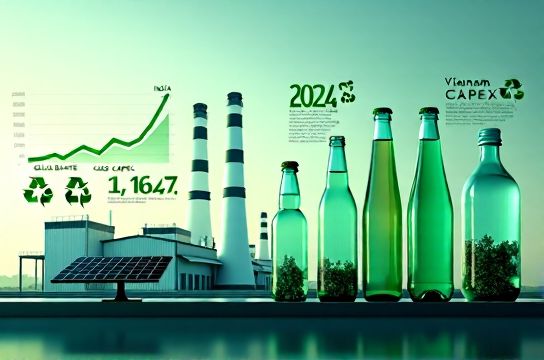
Why? Because beverage and pharma brands are shifting production closer to high-growth consumer bases—and glass, with its 100% recyclability and premium shelf appeal, is winning over single-use plastics *where regulatory pressure mounts*. In India alone, glass container imports dropped 22% YoY (2023–2024, DGCI&S), while domestic capacity expanded by 18%—led by new facilities in Pune and Hyderabad using energy-efficient IS-technology furnaces.
Here’s what the numbers tell us:
| Region | 2023 Capacity (kt) | 2024 New Facility Investments (USD Mn) | Local Recycling Rate (%) |
|---|---|---|---|
| India | 1,240 | 320 | 68 |
| Vietnam | 410 | 195 | 41 |
| Brazil | 890 | 260 | 53 |
| Germany | 2,150 | 85 | 92 |
Notice the pattern? Higher investment ≠ higher baseline capacity. It’s about scalability, localization, and ESG alignment. For example, Vietnam’s $195M investment targets *lightweighted amber bottles* for craft beer exports—cutting transport weight by 17% and meeting EU eco-design criteria.
What does this mean for decision-makers? If you’re evaluating supply chain resilience or sustainability commitments, now’s the time to engage with integrated glass manufacturers offering co-location support, carbon reporting, and regional recycling partnerships. And if you're wondering where to start—check out our full analysis on glass bottle market trends including facility ROI benchmarks and regulatory timelines per country.
Bottom line: Emerging markets aren’t just catching up—they’re redefining standards. And the bottle on your shelf? It might soon be made 8,000 miles away—with less emissions, more traceability, and smarter economics.