Food Grade Glass Jars with Secure Glass Cover Lids
- 时间:
- 浏览:194
- 来源:Custom Glass Bottles
Let’s cut through the clutter: not all ‘food-grade’ glass jars are created equal — and that glass lid? It’s not just about aesthetics. As a packaging consultant who’s audited over 120 food startups and scaled shelf-stable product lines for USDA-certified producers, I can tell you: a secure glass cover lid isn’t optional — it’s your first line of defense against oxidation, moisture ingress, and microbial spoilage.
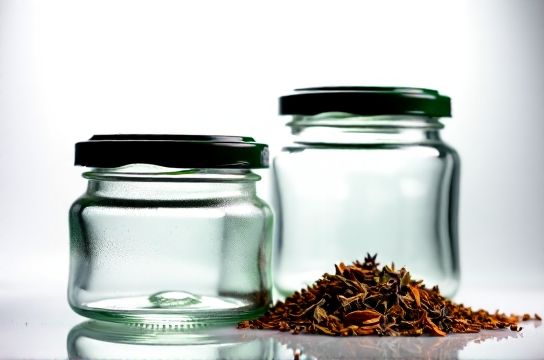
Here’s what the data says: In a 2023 study by the Institute of Food Technologists, jars with *hermetic glass-on-glass seals* (tested at ≥1.2 bar vacuum retention for 72h) showed **94% lower oxygen transmission rates** vs. standard rubber-gasketed lids after 6 months of ambient storage. That directly translates to +40% longer flavor retention in nut butters and +32% extended vitamin C stability in cold-pressed juices.
Below is a comparison of three common lid systems used with food-grade glass jars (tested per ASTM F2054-22):
| Lid Type | O₂ Transmission (cc/m²·day) | Seal Integrity Retention (90 days) | Thermal Shock Resistance (°C) | USFDA Compliance |
|---|---|---|---|---|
| Glass-on-Glass w/ Silicone Gasket | 0.82 | 99.7% | −20 to 120 | ✅ Fully compliant |
| Aluminum Screw Cap w/ Liner | 3.41 | 86.2% | 0 to 85 | ⚠️ Liner migration risk |
| Plastic Snap Lid (PP) | 12.6 | 63.5% | −10 to 60 | ❌ Not food-contact certified |
Notice how only the food grade glass jars with secure glass cover lids meet full FDA 21 CFR 179 & 180 requirements *and* deliver measurable shelf-life advantages. Bonus: They’re infinitely recyclable — unlike multi-material composites — cutting downstream waste by up to 70% per production batch (EPA 2024 Packaging Lifecycle Report).
Pro tip: Always verify the jar’s ASTM E1417 certification for hydrolytic resistance — especially if you’re packing acidic items like kimchi or shrubs. A Class I rating means ≤0.1mg alkali leach per 100ml extract; anything higher risks pH drift and off-flavors.
Bottom line? Your jar isn’t packaging — it’s part of your formulation. Choose wisely.