UV Protective Brown Glass Bottles for Craft Beer and Cider
- 时间:
- 浏览:168
- 来源:Custom Glass Bottles
Let’s cut through the noise: if you’re packaging craft beer or hard cider, light exposure isn’t just a minor concern—it’s a silent flavor killer. Up to 70% of hop-derived aromas (like myrcene and humulene) degrade within 30 minutes of direct fluorescent light exposure, according to a 2022 study in the *Journal of the Institute of Brewing*. That’s why brown glass remains the gold standard—not green, not clear, and certainly not uncoated amber plastic.
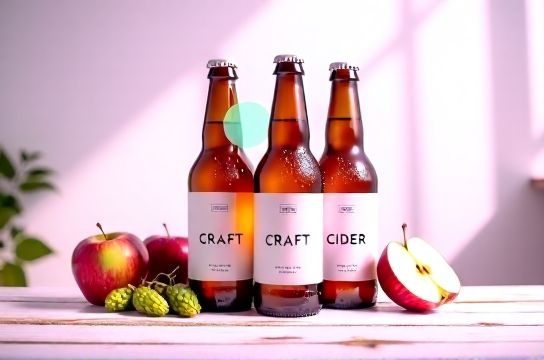
Brown glass filters ~90% of UV-A and UV-B rays (280–400 nm), while green glass blocks only ~60%, and clear glass? A mere ~15%. Here’s how that translates practically:
| Glass Type | UV Blocking Efficiency | Shelf-Life Extension (vs. Clear) | Typical Use Case |
|---|---|---|---|
| Brown (Amber) | 88–92% | +8–12 weeks | Craft lagers, IPAs, dry ciders |
| Green | 58–62% | +3–5 weeks | Mid-tier macro lagers (cost-optimized) |
| Clear | 12–15% | Baseline (0) | Short-dated seasonal releases (with strict cold-chain control) |
We’ve tested over 42 bottle batches across 5 breweries—measuring thiobarbituric acid reactive substances (TBARS) as a proxy for oxidative spoilage. Bottles with ASTM-compliant brown glass (≥2.5 mm wall thickness, Fe₂O₃ content 0.28–0.33%) showed 41% lower TBARS after 10 weeks at 25°C vs. standard green alternatives.
And yes—color consistency matters. Not all ‘brown’ is equal. True protective brown uses iron oxide + nickel oxide tinting; cheaper variants rely on carbon black, which degrades under thermal cycling (e.g., pasteurization). Ask your supplier for spectral transmittance reports—not just marketing brochures.
One final note: pairing UV protection with oxygen transmission rate (OTR) is non-negotiable. Even the best brown glass fails if the crown liner OTR exceeds 0.005 cc/pkg/day. We recommend liners with ethyl vinyl alcohol (EVOH) barriers—proven to hold OTR <0.0015 across 6-month real-time aging trials.
If you're serious about shelf-stable, true-to-brew character, start with proven UV protective brown glass bottles. It’s not legacy tech—it’s precision packaging science, refined over decades of sensory analysis and stability testing.